
Spanish mackerel are following bait south through the mid-Atlantic. October is the peak window from Delaware south through the Carolinas.
The fall run pulls Spanish mackerel through Delaware Bay, the Virginia coast, and into the Carolinas through October. State bag limits and minimum sizes differ from the federal floor. A 12-inch fork-length minimum and a 15-fish bag limit apply in federal waters; state rules inside three nautical miles may differ.
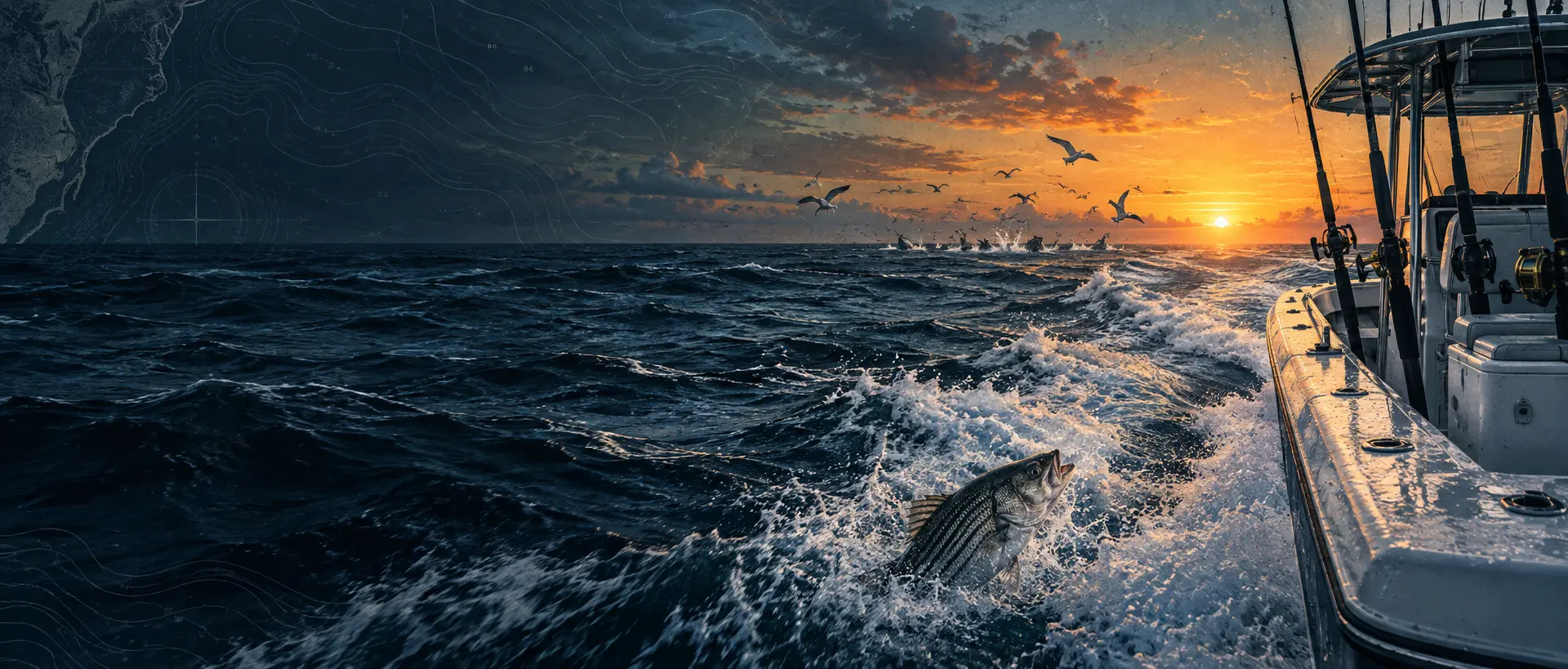
Spanish mackerel are in the fall Atlantic run now. The species follows peanut bunker, silversides, and bay anchovies south from late summer through November. The peak mid-Atlantic concentration typically runs September through October, with fish working Delaware Bay and the coast south through the Chesapeake entrance, the Virginia barrier islands, and the Outer Banks. By October the front is pushing through the Carolinas; by November the bulk of the run has reached the lower Carolinas and the northeast Florida Atlantic coast.
For anglers targeting them from the beach, pier, or light inshore boat, the species is often confused with king mackerel on the same fall corridor. Spanish mackerel are smaller: a typical fall-run fish weighs one to five pounds, where kings can push 20 to 40 pounds and larger. The pattern differs too, with Spanish mackerel showing round yellowish spots against a silver body, versus the elongated lateral-line spots and deeper body profile of a king. Gear overlap is real; both species cut standard monofilament with their teeth. A 20- to 30-pound fluorocarbon leader of about 18 inches handles Spanish mackerel. For kings, many anglers run a wire section to reduce bite-offs. If you are marking large fish on structure and nothing is hitting light-wire rigs, the fish are more likely kings.
Atlantic Spanish mackerel are managed under an ASMFC Interstate Fishery Management Plan, coordinated with the South Atlantic Fishery Management Council for the southern portion of the range. The federal recreational minimum size is 12 inches fork length, measured from the tip of the closed lower jaw to the fork of the tail. The federal daily bag limit is 15 fish per person. State rules inside three nautical miles can differ from those federal numbers; several Atlantic states run their own minimums and bag limits for Spanish mackerel in state waters. The practical check is the state marine fisheries agency page for the water you plan to fish. A trip along a barrier island or inlet channel may stay inside state water the entire time.
Three items belong on the pre-trip check. First, confirm the current minimum size and daily bag limit on the state marine fisheries agency page for the state water you are fishing. Second, verify you have a valid saltwater recreational fishing license in that state; Spanish mackerel do not require a federal permit. Third, if you plan to use natural bait, check whether circle-hook requirements apply in that area. The ASMFC Atlantic Spanish mackerel page at asmfc.org carries management background and stock status. State agencies are the controlling source for current rules in state waters.
On the water: Rules and conditions can change quickly. Confirm current regulations and official marine forecasts for your exact trip.