
King mackerel are peaking at Cape Fear. The fall run moves south through November.
October is the peak concentration window for king mackerel at Cape Fear, NC. Charter boats from Southport and Wrightsville Beach work nearshore structure with slow-trolled live bait. The run moves south through South Carolina and Georgia toward Florida's Atlantic coast through November.
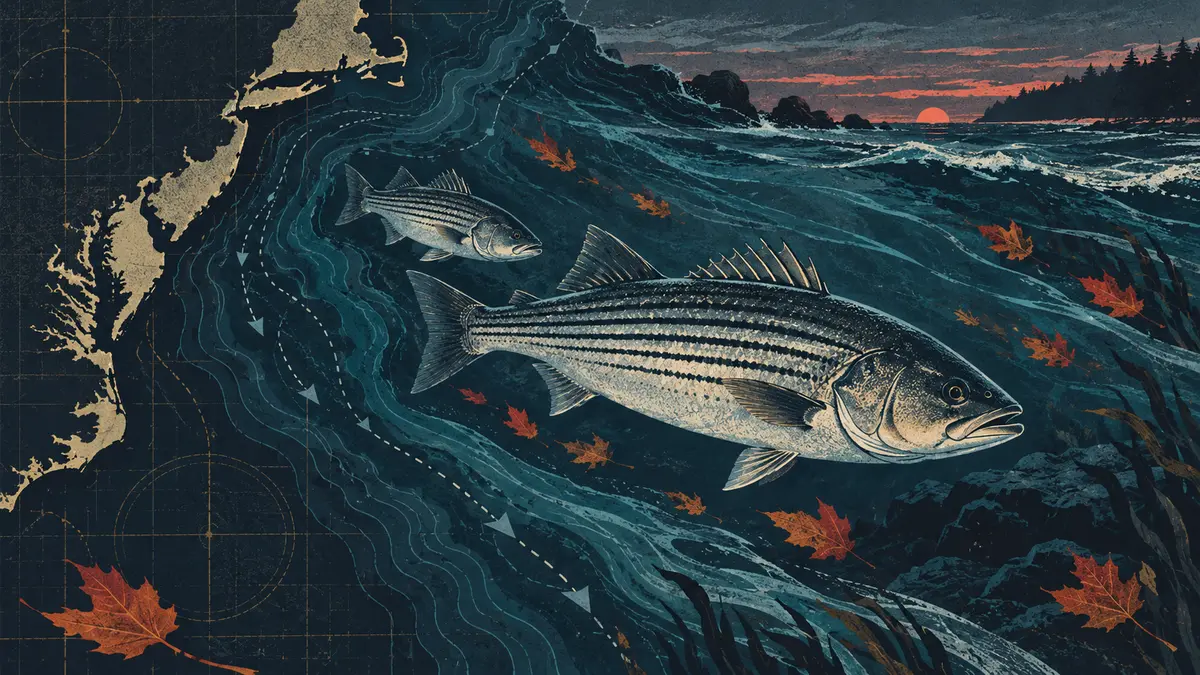
King mackerel are at their fall peak at Cape Fear, North Carolina. Fish stage at the mouth of the Cape Fear River in the Southport area starting in late September; concentrations build through mid-October, then the schools begin moving south. Charter captains from Southport, Wrightsville Beach, and Morehead City work this pattern annually. October is the peak window for nearshore kings off southeastern North Carolina.
The Atlantic king mackerel stock migrates north in spring and south in fall, following forage. Spot, menhaden, and finger mullet move through the same nearshore corridor on the same schedule. In summer, kings are scattered from Virginia through the Carolinas; by late September, fish from the northern end of the range start condensing around Cape Fear. After mid-October, the run continues south through Brunswick County, into the Myrtle Beach area and the northern South Carolina coast, and toward Georgia and northeastern Florida by November. The timing varies year to year with water temperature and bait concentration. The Cape Fear window is not a fixed calendar date, but mid-October is the historical center of it.
Slow-trolling live bait is the primary method from boats working North Carolina nearshore structure. Spot is the preferred live bait in this region and can be caught on sabiki rigs in the morning before a trip. Trolling speed runs 2 to 4 knots over inshore reef structure. Wire leader is essential: king mackerel have sharp, serrated teeth and will cut monofilament or fluorocarbon on a single strike. A stinger setup with a trailing treble attached to the back of the live bait extends the hookup zone for fish that strike short of the head. Frying Pan Shoals, the nearshore reef structure off Bald Head Island, and the inshore reefs south of Wrightsville Beach are among the primary grounds for Southport and Wrightsville Beach departures.
King mackerel on the Atlantic coast are managed cooperatively by the South Atlantic Fishery Management Council and the Gulf of Mexico Fishery Management Council under the Coastal Migratory Pelagics Fishery Management Plan. In the South Atlantic federal waters, current recreational regulations set a minimum size of 24 inches fork length. The daily bag limit in federal waters is three fish per person. Atlantic state waters carry their own rules; Florida state waters have a two-fish daily limit per person, and other coastal states set their own requirements. Current North Carolina state rules are at the NC Division of Marine Fisheries site. The SAFMC king mackerel page at safmc.net carries the management plan background and any recent amendments. Confirm the specific rules for the water you plan to fish before departure.
This is a fall migration overview, not a current charter report from the water. Saltwater News will carry attributed king mackerel reports as they come in from Cape Fear-area charters. Absence of a report from a given port means the feed has no attributed source from that area, not that fish are absent. The three-day pre-storm window October 9 through 11 is covered in the fall bite preview piece on this site. Current marine zone conditions for NC nearshore and offshore waters are at weather.gov/mhx (NWS Morehead City NC) and weather.gov/ilm (NWS Wilmington NC).
On the water: Rules and conditions can change quickly. Confirm current regulations and official marine forecasts for your exact trip.