
Bluefish are in the fall mid-Atlantic mix. Schools follow bait south through November.
Schools of Pomatomus saltatrix follow baitfish south from New England as surface temperatures drop, reaching the Carolinas by November. Wire or heavy fluorocarbon is standard terminal tackle; state bag limits vary.
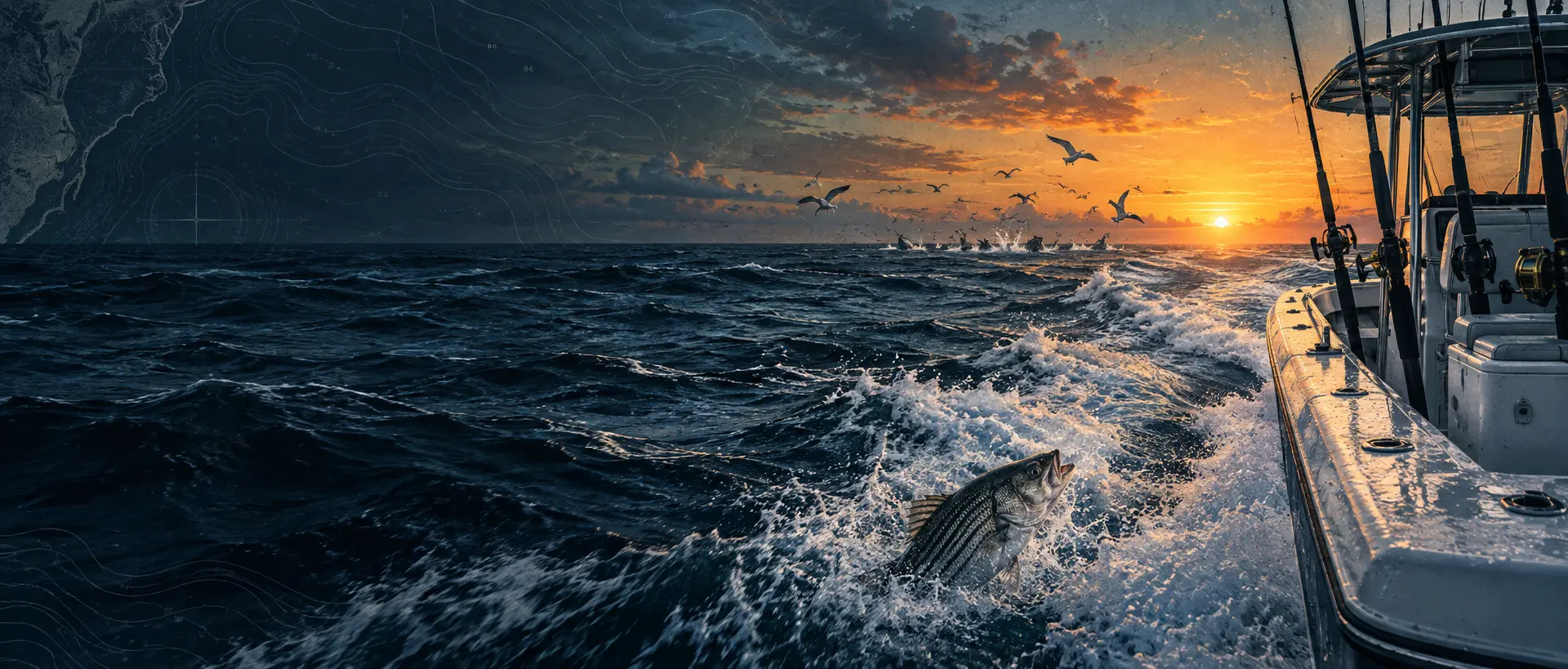
Bluefish (Pomatomus saltatrix) are running the mid-Atlantic coast in fall. Point Pleasant Beach Fleet and Southern NJ roundups logged them alongside stripers and other pelagics through September, a pattern that repeats annually as water temperatures drop and the migration pushes south. Through October and November, schools move from Long Island Sound and the Jersey shore through the Delaware and Chesapeake areas, into Virginia and the Outer Banks.
Most fall Atlantic bluefish weigh one to ten pounds; fish in the fifteen-pound range turn up during the run, particularly in the mid-Atlantic. Sharp teeth on powerful jaws cut monofilament quickly, so wire leader or heavy fluorocarbon is standard whether fishing cut bunker from a pier, metal lures from the surf, or topwater plugs from a boat. They feed on bay anchovies, bunker, and sand eels, and push bait to the surface in visible blitzes. Those blitzes can end fast when the school sounds.
Federal recreational bluefish regulations are set under an ASMFC Interstate Fishery Management Plan. NOAA Fisheries administers the federal recreational rules for waters beyond state jurisdiction; each Atlantic state sets its own rules for state waters. State limits can differ from the federal baseline. The ASMFC bluefish page at asmfc.org is the framework reference. For the current bag limit and size minimum at your ramp, go to your state marine fisheries agency.
Saltwater News will carry attributed bluefish reports by region as fall coverage develops through October. Reports in the feed are sourced observations from charters and regional roundups; absence of a report from an area means no attributed source, not that fish are absent.
On the water: Rules and conditions can change quickly. Confirm current regulations and official marine forecasts for your exact trip.