
After Columbus Day: striped bass, albies, bluefish, and tautog in the last three weeks of October
Updated October 12: NWS has confirmed Tuesday through Thursday as the departure window from the mid-Atlantic and New England. Striped bass and bluefish keep moving south as conditions clear, the albie window narrows on Long Island and opens in the Carolinas, and tautog season is open across the mid-Atlantic. MA black sea bass last day is October 14. Friday night a second cold front closes the offshore window again.
Update, Monday October 12: NWS Philadelphia midday packages confirm the mid-Atlantic offshore corridor is below the gale threshold now. The confirmed departure window runs Tuesday October 13 through Thursday October 15. A strong cold front approaches Friday night, October 16, returning gale-force conditions to the mid-Atlantic offshore corridor and Georges Bank; the offshore window closes again Friday. Thursday afternoon NWS packages at marine.weather.gov and ocean.weather.gov/shtml/NFDOFFNT1.php are the check before any Friday commitment. Massachusetts black sea bass: Wednesday October 14 is the last day of the 2026 season, with a two-fish daily limit at 16-inch minimum. NY Bight tautog opens Thursday October 15, the last day of the departure window. CT and NY summer flounder close after October 15.
The Columbus Day storm disrupted departures through October 13 along the Jersey shore, Long Island, the Delmarva coast, and the Chesapeake corridor. After conditions settled, October 13 and later, the mid-Atlantic fall run resumed in waters that have been active since late September. Fall migration does not stop for a storm; fish continue moving south through October regardless of disruption to individual departure windows.
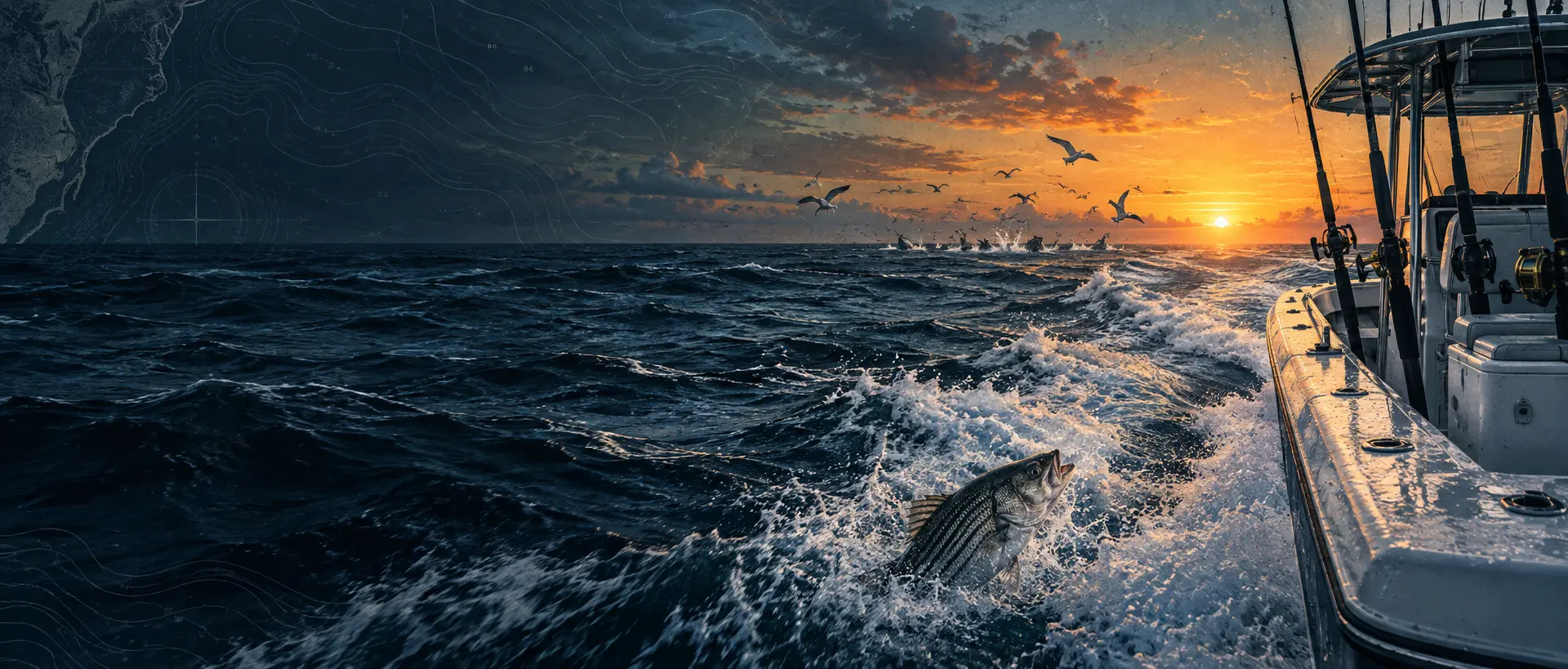
Striped bass are the primary species in the mid-October picture. Fish from the Hudson estuary, Long Island Sound, and southern New England are in peak southward migration along the Jersey shore and Long Island south shore. The Chesapeake Bay enters its most active striper month in October, with fish staging on mid-Bay structure from the Bay Bridge south through the Patuxent and Potomac corridor, then pushing toward the lower Bay and the Chesapeake Bay Bridge-Tunnel area in Virginia through November. Water temperature drives timing; a warm October slows the push, a cold one speeds it. Striped bass are managed under an ASMFC Interstate Fishery Management Plan, and the stock is currently declared overfished, which is why several states have size restrictions protecting large female spawners. Confirm the minimum size and bag limit on your state agency page before any trip, not a screenshot or dock summary from earlier this season.
False albacore are typically accessible from Shinnecock and Montauk through mid-October, narrowing as surface temperatures drop. By late October, most of the Long Island and southern New England albie population has pushed south; the Outer Banks and Cape Hatteras area picks up albies through October and into November. Bluefish have been running with stripers and pelagics along the Jersey shore since September and are moving toward the Delaware and Chesapeake corridor through October. Wire or heavy fluorocarbon leader is standard when blues are in the mix.
Tautog season is open across most of the mid-Atlantic range. Connecticut opened October 10, New York opened Long Island Sound waters October 11 and NY Bight ocean waters October 15, and most mid-Atlantic tautog seasons run into November and December. Four regulatory windows land in the same period: Massachusetts black sea bass closes after October 14; summer flounder in Connecticut and New York closes after October 15; Florida summer flounder closes after October 14; Maine black sea bass reopens October 18. Current 2026 season dates are in the regulation calendar on this site.
King mackerel are concentrating at Cape Fear in mid-October and moving south along the Carolinas and toward northeastern Florida through November. The federal three-day South Atlantic red snapper season closed at 12:01 AM October 12. Florida, Georgia, and South Carolina received exempted fishing permits that extend harvest access through October 22 under each state's individual harvest limit; North Carolina has no EFP and the federal window was its only October access. See the South Atlantic red snapper season piece on this site for EFP bag limits and the NOAA Fisheries in-season bulletin check before departure. Carolina and Georgia nearshore trips after the Columbus Day storm clears are worth watching for attributed reports as conditions improve.
This is a planning overview built on historical migration patterns and current regulation information. No current charter reports are attached. Whether species are accessible on a specific day depends on conditions, water temperature, and bait concentration. Absence of a report from a specific port here means the feed has no attributed source from that area, not that fish are absent. For departure planning after the storm: NWS Philadelphia (weather.gov/phi), NWS Upton NY (weather.gov/okx), and NWS Baltimore (weather.gov/lwx) for Chesapeake zones. State marine fisheries agency pages are the controlling source for any regulation question.
On the water: Rules and conditions can change quickly. Confirm current regulations and official marine forecasts for your exact trip.