
Chesapeake Bay fall striper: fish move south through October as Columbus Day storm disrupts the window
Fish from the Susquehanna Flats and upper Bay tributaries stage on mid-Bay structure through October, then push into Virginia waters by November. Maryland harvest season runs September 1 through December 5 with a 19-to-24-inch slot; Virginia runs October 4 through December 31 with the same slot.
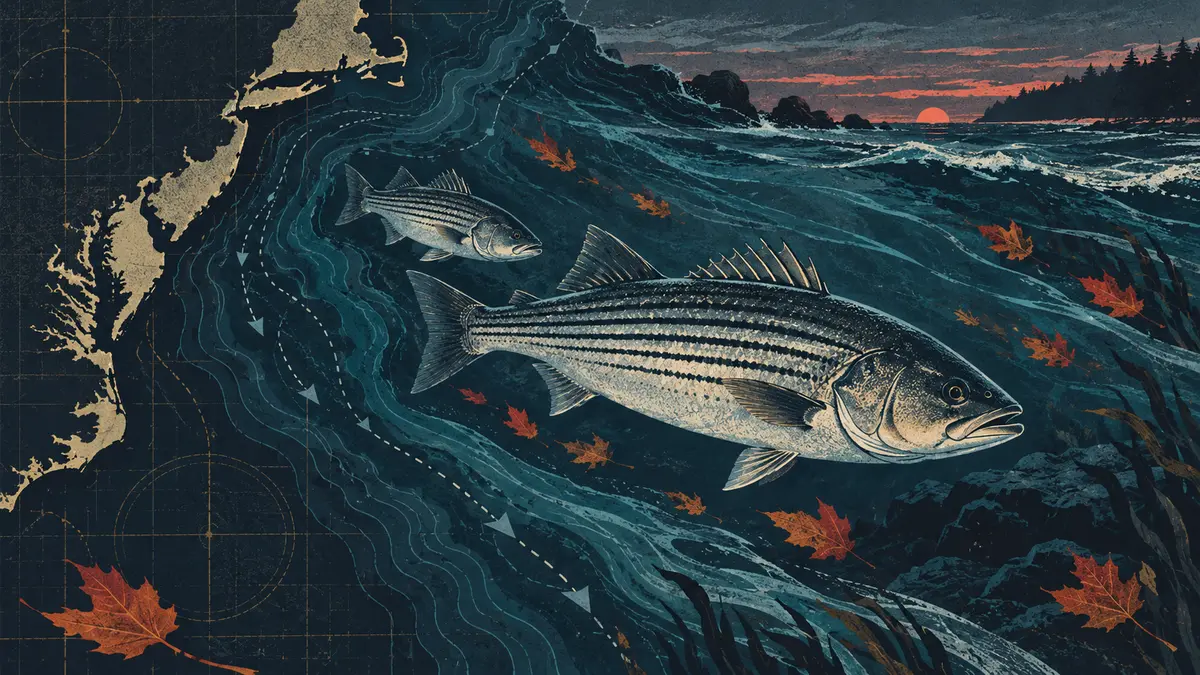
October is the central month for Chesapeake Bay striped bass fishing. Fish that spent the summer in the upper Bay and its tributary mouths move south as water temperatures drop, staging on mid-Bay structure and channel edges before pushing further south into Virginia waters through November. The Columbus Day weekend storm will disrupt departures from Saturday, October 12, through at least Monday; the broader fall window runs well into November regardless.
The upper Bay holds fish through September. The Susquehanna Flats above Havre de Grace and the Chester, Sassafras, and Choptank river mouths are traditional concentration areas in early fall. By October, fish stage on mid-Bay structure: Pooles Island in the upper Bay, the Bay Bridge pilings and channel edges south of Annapolis, and the Eastern Bay area on the Eastern Shore. From the Bay Bridge south through the Patuxent and Potomac mouths to Point Lookout, channel-edge jigging and bucktail work on rocky drops are standard approaches. In November, fish push further south toward the lower Bay, the Potomac mouth corridor, and, eventually, the Chesapeake Bay Bridge-Tunnel in Virginia. The timing shifts each year with water temperature and bait movement; a storm can move fish around within the Bay rather than simply shutting down activity.
Maryland's Chesapeake Bay and tidal tributary harvest season runs September 1 through December 5. The bag limit is one fish per person per day. The slot is 19 to 24 inches total length; fish below 19 inches or above 24 inches must be released. December 6 through December 31 is catch and release only. The 24-inch maximum is designed to protect large female spawners, which produce the majority of eggs. Current Maryland regulations are at dnr.maryland.gov.
Virginia's Chesapeake Bay and tributary season opens October 4 and runs through December 31. The daily bag limit is one fish per person. The slot is also 19 to 24 inches total length. The state boundary runs across the Bay at the Potomac River mouth; the line falls roughly at Smith Point on the western shore. Anglers launching from Virginia ramps in the lower Bay fish under Virginia Marine Resources Commission rules, not Maryland's. VMRC current regulations are at mrc.virginia.gov.
Jigging bucktails and paddle-tail plastics on channel drops, bridge structure, and rocky points produces fish through October and November. In October, topwater blitzes occur at dawn and dusk when schooling stripers push bay anchovies or spot against the surface; false albacore sometimes share the same bait schools during this period. Live-lining spot or perch from an anchored boat over a lump or channel edge is a traditional mid-Bay approach. The productive temperature range is roughly 55 to 65 degrees surface temperature; as water drops below 50, surface activity slows and fish tend to hold deeper on structure.
Atlantic striped bass has been declared overfished under the ASMFC management plan. Maryland's juvenile abundance index recorded below-average spawning success for seven consecutive years through 2025, and the Chesapeake Bay is where more than 70 percent of the Atlantic coast spawning stock reproduces. The 24-inch maximum size limit is one conservation measure in response to those numbers. The ASMFC Atlantic Striped Bass Management Board is working through Draft Addendum III, which could produce additional management measures; current stock status and addendum documents are at asmfc.org/species/atlantic-striped-bass.
The Columbus Day weekend storm brings peak impacts to the Bay area Sunday, October 12 through Monday. NWS Baltimore issues current zone products for Bay waters at weather.gov/lwx; check zone forecasts before any launch. October 9 through 11 is the viable window before peak storm impacts; Bay activity resumes after conditions settle, likely October 14 and later. State agency pages are the controlling source for any mid-season rule changes. This is a planning overview, not a current charter report from the water.
On the water: Rules and conditions can change quickly. Confirm current regulations and official marine forecasts for your exact trip.