
Tautog fall tackle for Connecticut and Long Island Sound waters
Connecticut opened October 10 with a three-fish, 16-inch minimum. New York Long Island Sound opens October 11. The Columbus Day storm pushes the first realistic departure to October 14 for most ports. Green crab, a high-low rig, and braided line are the baseline; each element has specific requirements.
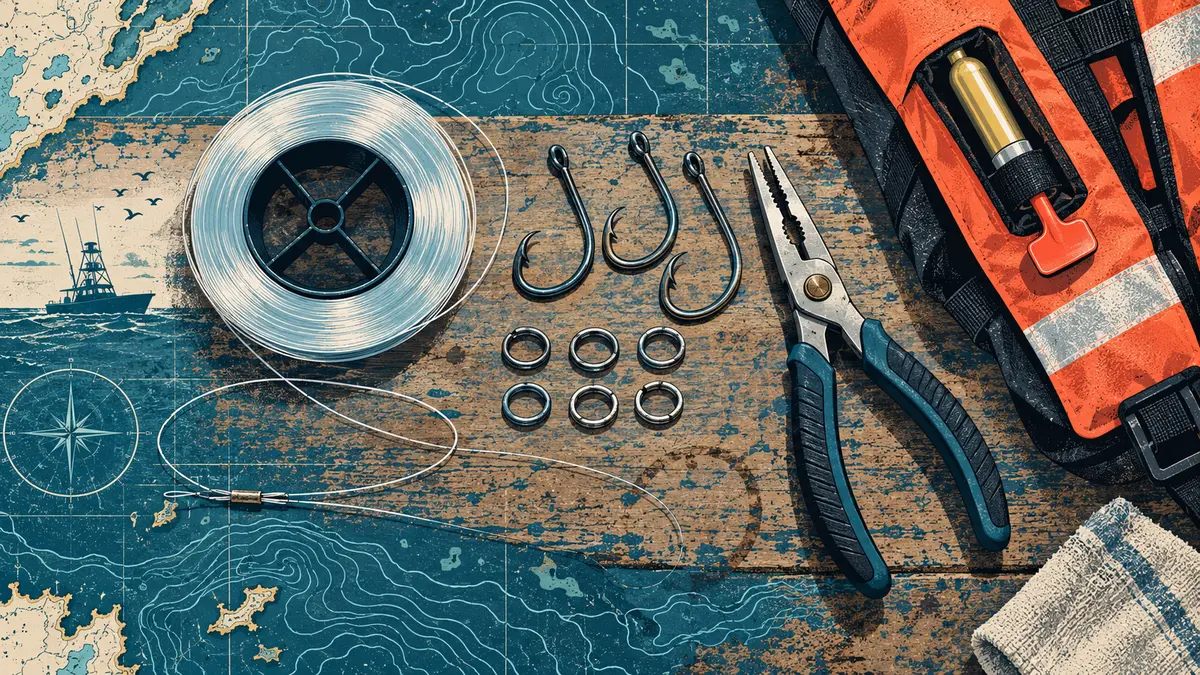
Connecticut opened the fall tautog season October 10 with a three-fish daily limit and a 16-inch minimum. New York opens Long Island Sound waters October 11. The Columbus Day storm has cut departure windows for most Connecticut and Long Island Sound ports through Sunday night; October 14 is the earliest realistic date. Green crab, a high-low bottom rig, and braided line are the baseline for structure fishing in both states.
The standard rig is a two-hook high-low setup: a short dropper 6 to 8 inches above a bank or torpedo sinker, a longer dropper at the bottom. Sinker weight runs 2 to 4 ounces in 30 to 60 feet of water on slow tide; running tide through the Race or off Connecticut River structure can require 5 to 6 ounces to stay on bottom. Braided line from 20 to 40 lb reads the tautog bite better than monofilament. The bite is a thump and a hold, not a run, and goes quiet fast when the fish holes up. Fluorocarbon leader in the 30 to 50 lb range handles the abrasion from wrecks and rock. Short-shank hooks in the 2/0 to 3/0 range are the standard choice. Tautog have crushing molars adapted for shellfish, and a light-wire hook in the 3/0 range gets straightened on heavy structure. Any short-shank hook with a wide gap and heavy wire works; Owner, Gamakatsu, and VMC all make suitable styles.
Green crab is the standard tautog bait in the northeast. Quarter a medium-sized crab, expose the legs, and thread the hook through the body cavity without covering the point; smaller crabs go on as a half. Live green crab outperforms frozen when available. Asian shore crab is widely stocked at Connecticut and Long Island tackle shops and is effective, though some anglers find it holds less reliably in current than green crab. Mussels produce but wash off easily and require a bait needle or elastic thread to stay on the hook through a drop. Fiddler crabs work well for inshore jetty fishing on smaller fish but are harder to source in October.
Tautog hold on any hard substrate: wrecks, rocky reefs, jetty pilings, bridge footings, mussel beds, and riprap. Finding structure with fish is the primary challenge; GPS marks from tackle shops and local knowledge carry more weight at a new location than generic bottom charts. First and last hours of moving tide are usually the most active window on open-water structure. Dead slack slows bites offshore; jetty fish bite more consistently through it. A conventional baitcaster handles repeated snag-and-pull at heavy structure better than a spinning reel, though spinning works at jetties where cast distance matters.
The main practical cost of tight structure fishing is gear loss. A rig dropped into a wreck and snagged on the retrieve is routine; bring extra pre-tied high-low rigs and sinkers. The other frequent mistake is setting the hook too late. Tautog pick up the bait and move immediately into structure. By the time the thump registers as a steady pull, the fish is usually fouled around a wreck member or under a ledge, and a straightened hook or broken leader is the result. Quick hooksets are necessary. Connecticut 2026 season rules are at the Connecticut DEEP saltwater fishing regulations page. New York rules are at the New York DEC recreational fishing regulations page. In-season emergency changes post to state agency sites first.
On the water: Rules and conditions can change quickly. Confirm current regulations and official marine forecasts for your exact trip.